There’s something deeply comforting about walking into a space that instantly makes you exhale. Cozy decor isn’t about trends or perfection—it’s about creating a home that feels safe, warm, and inviting at the end of every long day. With a few thoughtful choices, you can decorate for comfort in a way that feels natural, lived-in, and personal.
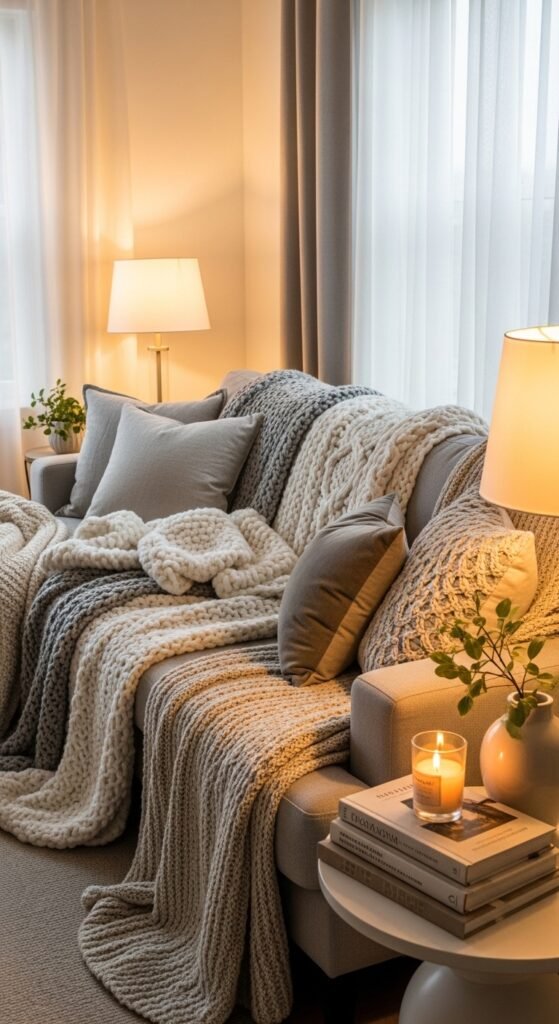
Below are easy, realistic ways to decorate for comfort using cozy decor—no major renovations required.
Start With Soft, Layered Textiles
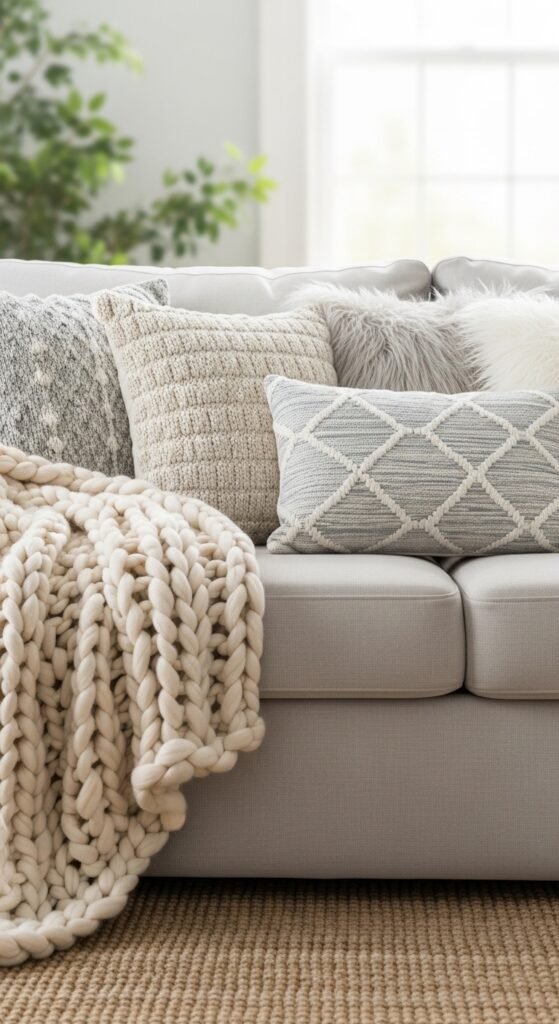
Comfort almost always begins with texture. Layering soft materials adds instant warmth and makes a room feel welcoming instead of flat.
Think about adding:
- Throw blankets draped casually over sofas or chairs
- Cushions in different fabrics like cotton, knit, or faux shearling
- Area rugs that feel soft underfoot, even in small spaces
Mix textures rather than matching everything perfectly. A slightly rumpled look actually adds to the cozy effect and makes the space feel more relaxed.
Choose Warm, Gentle Lighting
Lighting plays a huge role in how comfortable a room feels. Bright overhead lights can feel harsh, while softer lighting instantly creates a calmer mood.
To decorate for comfort:
- Use table lamps and floor lamps instead of relying only on ceiling lights
- Choose warm-toned bulbs for a softer glow
- Add small accent lights in corners or on shelves
Lighting doesn’t need to be dramatic. Even one warm lamp in the right spot can completely change how a room feels at night.
Create Cozy Corners for Everyday Living
Comfortable homes often have little corners that feel intentional, even if they’re simple. These spots invite you to slow down.
Ideas for cozy corners:
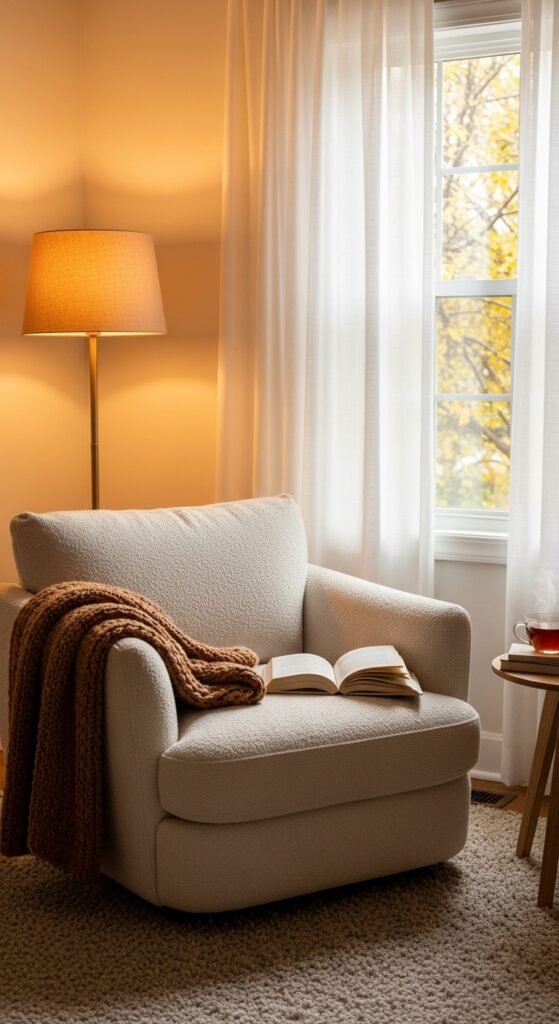
- A chair with a throw blanket and a small side table
- A window seat layered with cushions
- A reading nook with a lamp and a stack of books
These spaces don’t need to be styled perfectly. The goal is to make them usable and comforting, not just decorative.
Stick to Calm, Comforting Colors
Color has a big impact on how relaxed a space feels. Cozy decor usually leans toward softer, muted tones rather than bold contrasts.
Comfort-friendly color ideas include:
- Warm neutrals like beige, cream, and soft gray
- Earthy shades such as muted brown, clay, or sage
- Gentle accents instead of sharp pops of color
You don’t have to repaint the entire room. Introducing these tones through pillows, rugs, or decor pieces can shift the mood without overwhelming the space.
Decorate With Meaningful, Personal Items
Comfort comes from familiarity. When a home reflects your life, it naturally feels warmer and more inviting.
Try incorporating:
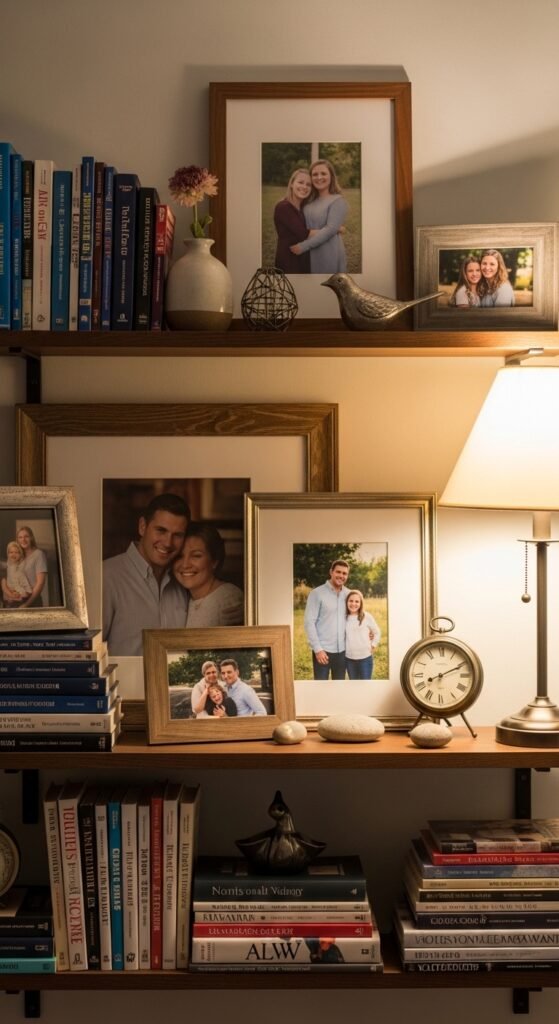
- Framed photos or art that brings good memories
- Books you actually enjoy flipping through
- Small objects collected over time, not all at once
Avoid filling shelves just to make them look styled. A few meaningful pieces will always feel cozier than a crowded display.
Keep Spaces Uncluttered but Lived-In
A cozy home isn’t spotless or empty—it’s balanced. Too much clutter can feel stressful, while overly minimal spaces may feel cold.
To keep things comfortable:
- Edit decor so each piece has space to breathe
- Store everyday items in baskets or trays
- Leave room for natural use and movement
Think “collected over time” instead of “perfectly styled.” Comfort grows when a room feels easy to live in.
Add Small Comfort Details Throughout the Room
Sometimes it’s the little things that make a space feel cozy.
Simple details to try:
- A tray on the coffee table to gather small items
- A soft rug beside the bed for mornings
- Curtains that soften windows and filter light
These touches may seem minor, but together they create a home that feels warm and thoughtful.
Let Comfort Guide Your Choices
The most important rule of cozy decor is this: decorate for how you want to feel. Trends can inspire you, but comfort should always come first.
If something feels inviting, calming, or familiar to you, it belongs in your home. Cozy decor isn’t about copying a look—it’s about creating a space that supports rest, connection, and everyday comfort.
Takeaway: Start small, layer textures, soften your lighting, and add pieces that matter to you. Save this guide and come back whenever your home needs a little extra comfort.